Woolf Malta Doctor of Business Administration (DBA) in Qatar
Woolf (Malta) · Delivered with Edzip Education
This Woolf Malta DBA in Qatar is a fully online, three-year doctorate for mid- to senior-level managers and executives. Woolf is a licensed higher education institution in Malta (licence 2019-015). The programme carries 180 ECTS over 36 months, with no residency and no entrance test listed. Recognition in Qatar is not confirmed, so check with your employer and regulator before you enrol.
Programme at a glance
| Item | Detail |
|---|---|
| Award | Doctor of Business Administration, awarded by Woolf (Malta) |
| Credits | 180 ECTS at EQF level 8, in three tiers of 60 ECTS |
| Format | Fully online, full-time or part-time distance education in Qatar |
| Structure | Three tiers in order: research plan, research development, then thesis and viva |
| Duration | 36 months; 4,500 study hours in total |
| Accelerated route | None listed |
| Weekly study time | 4,500 hours over 36 months averages about 29 hours a week |
| Intake | Rolling admission, with no fixed start dates published |
| Tests | No entrance test listed |
| Residency | None; the programme is fully online |
| Scholarship | None found |
| Fees | Woolf lists EUR 19,200 through Studienzentrum Hohe Warte and USD 18,000 through Exeed College, for the whole DBA |
Why you can trust this programme
- Accreditation, in plain terms: Woolf holds a higher education institution licence from Malta's regulator (MFHEA), and its degrees use European frameworks (ECTS, EQF level 8). No business-school accreditation (AACSB, AMBA, EQUIS) was found, and a licence is not recognition by Qatar's Ministry. See Accreditation and recognition.
- Institution and location: Woolf is a collegiate higher education institution in Malta, founded in 2018 and licensed since September 2019. It describes itself as an institution rather than a university.
- Scale: Woolf says it has more than 400 doctoral students (its own claim; no year given).
- Edzip's local role: Edzip Education is a Doha-based online degree platform that supports working professionals in Qatar and the GCC from admission to graduation.
- Who does what: Woolf (Malta) teaches, assesses and awards the degree through its delivery college. Edzip guides you from admission to graduation.
What is the Woolf Malta DBA?
The DBA is a research doctorate for practising managers. You spend most of the three years on independent research under a supervisor, rather than attending a series of taught modules.
Compared with a PhD, a DBA is aimed at applying research to business practice. Woolf describes the programme as developing researchers in strategic business management, in fields such as finance, marketing, project management and supply chain management.
Two examples. A finance director can use the research plan to investigate a question about risk governance in their own organisation. An operations head can focus the thesis on a supply chain problem and finish with a defended, original piece of research.
About Woolf (Malta) and Edzip Education
Woolf is a collegiate higher education institution in Malta, founded in 2018 and licensed by Malta's regulator since September 2019. It says it works with more than 30 colleges, and the DBA is delivered through colleges such as Studienzentrum Hohe Warte and Exeed College.
Edzip Education is a Doha-based online degree platform. Woolf (Malta) teaches, assesses and awards the degree through its delivery college. Edzip guides you from admission to graduation through Edzip's guidance services in Qatar.
How do I get my degree attested for Qatar?
The attestation chain for this programme has not been verified. Qatar's Ministry of Foreign Affairs ties attestation to the awarding institution being on the Ministry's recognised list, and no source places Woolf on it. Attestation proves that a document is authentic. It does not prove equivalency to a Qatari qualification.
Edzip Education is a Doha-based online degree platform. Woolf (Malta) teaches, assesses and awards the degree through its delivery college. Edzip guides you from admission to graduation through Edzip's guidance services in Qatar.
- Qatar Ministry of Foreign Affairs (MOFA): Completes the attestation.
Documents Required:
(All documents must be submitted in English)

NEXT BATCH OPEN
Earn Your DBA in Science
A doctorate for working professionals. Study alongside your job and apply every idea at work.

NEXT BATCH OPEN
Doubts About the University or Program?
Our Edzip counsellors are here to help you choose with confidence.
Who this programme is for
Woolf aims the degree at mid- to senior-level business executives and managers who want the highest level of expertise and qualification in business and management.
Who it is for
If you are weighing up options, see online degrees for working professionals in Qatar.
What you can achieve
Career paths after the Woolf Malta DBA
Woolf lists leadership, strategic planning, consulting and advisory skills among the programme's learning outcomes. It may suit managers who want to move towards senior advisory, strategy or research-led roles.
Woolf expects the thesis to contain publishable work, and graduates leave with a plan for revising it towards publication. That plan can also be useful in teaching or research settings.
Whether you can use the title "Dr" in Qatar, for employment or other purposes, depends on recognition rules that are not confirmed for this degree.
This programme does not guarantee promotion, a salary increase, a job or any professional title.
Eligibility
- Standard entry: Exeed College's page lists a master's degree or MBA (or equivalent) from a recognised institution, and at least three years of managerial experience. Woolf's own programme pages list no requirements.
- English: IELTS 6.0 or equivalent, per Exeed College.
- Tests: no entrance test is listed.
- Accelerated route: none listed.
DBA Curriculum Structure: Three Research Tiers and Specialisations
The DBA is built as three tiers rather than a list of taught modules. Woolf's course detail gives 1,500 hours and 60 ECTS to each tier, although its summary lists 2,000, 1,000 and 1,500 hours.
-
Advanced Research Planning and Methodology for Business
- Research Development and Progress Review
- Thesis Completion and Viva Voce Examination
You build a research plan with your supervisor, covering a provisional title, abstract, expanded table of contents, literature survey, annotated bibliography and timeline. Topics may include doctoral writing, quantitative and qualitative methods, organisational behaviour and leadership, business analytics and corporate governance. An examiner with a research doctorate assesses the plan, normally by the end of the first year.
You carry out the research and draft a substantial part of the thesis, usually two to four chapters. You take part in “Work in Progress” seminars and may present at doctoral colloquiums.
You bring the research together into one argument and defend it in a viva. The thesis ordinarily does not exceed 80,000 words.
Specialisation certificates: Exeed College lists 14 specialisation certificate options, each of 375 hours and 15 ECTS.
DBA Assessment, Research Supervision and Viva Voce
Within each tier, regular assignments typically carry 20% and a final assignment or project 80%. These grades are indicators of progress. The degree itself is awarded on a pass or fail basis following the viva voce examination.
Supervision runs on a fixed pattern. You meet your supervisor twice a month in Tier 1, usually no more than twice a month in Tier 2, and at least monthly if you are full-time in Tier 3. Your supervisor holds a DBA or PhD in your field, or has published recent peer-reviewed work in it, and the college dean approves the match.
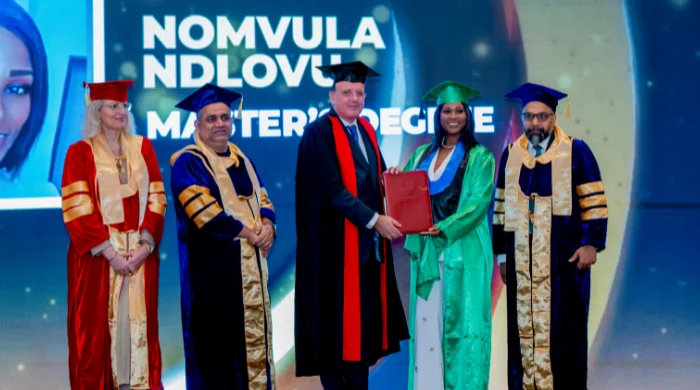
For ceremony information, see online graduation ceremonies in Qatar.
Institutional status: Woolf is a licensed higher education institution in Malta, not a university under Maltese law. Its Qatar recognition position is unconfirmed for this programme.
For GCC applicants: check with your employer and your regulator before enrolling, and ask the Ministry whether this degree can be recognised.
A degree is not automatically recognised by Qatar’s Ministry of Education and Higher Education. Alignment with European frameworks does not guarantee recognition.
Why choose the Woolf Malta DBA through Edzip
Institution's role
Woolf (Malta) awards the degree through its delivery college.
Edzip's support
guidance at each stage from enquiry to graduation, including a check of the college, fee and entry requirements before you apply.
Format fit
fully online doctorate with supervision by appointment, designed for working managers.
Award type
one DBA awarded by Woolf.
Rolling admission
no fixed intake dates are published.
Fee clarity
the fee depends on the delivery college, and Edzip can confirm which applies.
Woolf DBA vs Postgraduate Diploma in Business Administration
Compare Woolf’s Doctor of Business Administration (DBA) and Postgraduate Diploma in Business Administration (PGDip) by qualification level, ECTS credits, duration, workload, and fees. Understand the key differences to choose the programme that best aligns with your professional experience and academic goals.
| Row | Woolf PGDip Business Administration | Woolf DBA |
|---|---|---|
| Level | EQF level 7 |
✓
EQF level 8
|
| Credits | 60 ECTS |
✓
180 ECTS
|
| Duration | 12 months |
✓
36 months
|
| Workload | 1,500 hours |
✓
4,500 hours
|
| Fee | EUR 4,600 (Pickering Global Campus) |
✓
EUR 19,200 (Studienzentrum Hohe Warte) or USD 18,000 (Exeed College)
|
| Best for | Managers who want a shorter postgraduate award |
✓
Managers who want a research doctorate
|
Your Admission Journey with Edzip
Follow our step-by-step process to secure your enrolment
1. Check the basics.
1. Check the basics. Confirm your master's degree, your managerial experience, your English level and the delivery college. Edzip can help you review these before you apply.
2. Check recognition.
2. Check recognition. Ask your employer and regulator whether a Woolf DBA is acceptable for your purpose before you commit.
3. Apply.
3. Apply. Applications are made through Woolf's apply page or the delivery college's enquiry form.
4. Agree your research area.
4. Agree your research area. Woolf connects you with a supervisor whose field matches your topic.
5. Start.
5. Start. Admission is rolling. In your first months you will work towards your research plan, meeting your supervisor twice a month.
6. Track your progress.
6. Track your progress. Stay in regular contact with your supervisor, follow your research milestones, and complete the required assessments and doctoral thesis in line with the programme requirements.
Frequently Asked Questions
It is a fully online Doctor of Business Administration awarded by Woolf (Malta) at EQF level 8. It is built around research, supervision and a defended thesis.
You progress through three tiers: a research plan, research development and a thesis with a viva. A supervisor guides you through each tier.
The programme runs for 36 months, with 4,500 study hours in total. See Programme at a glance.
The total averages about 29 hours a week across 36 months. Ask an Edzip advisor for the latest guidance before you apply.
Woolf holds a Maltese higher education licence, and no business-school accreditation was found. See Accreditation and recognition.
There is no written confirmation for Woolf or this DBA. Check with your employer, your regulator and the Ministry before enrolling.
Woolf lists the DBA through Studienzentrum Hohe Warte and through Exeed College, with different fees.
No entrance test is listed. Exeed College lists IELTS 6.0 or equivalent.
Exeed College lists a master's degree or MBA and three years of managerial experience. See Eligibility.
The degree is awarded pass or fail after the viva voce examination.
No current scholarship was found.
Admission is rolling, with no fixed start dates published.
Woolf lists EUR 19,200 through Studienzentrum Hohe Warte and USD 18,000 through Exeed College for the whole DBA.
Attestation proves authenticity, not equivalency, and Qatar's position on this degree is unconfirmed. See How do I get my degree attested for Qatar?.
Explore related programmes
Comparing options? Compare online degree programmes in Qatar

Online EIMT DBA

Online DBA with Virscend University

Online EIMT Doctorate in Computer Science (Qatar)